
Premium Storm Shelters Installed Across Kentucky
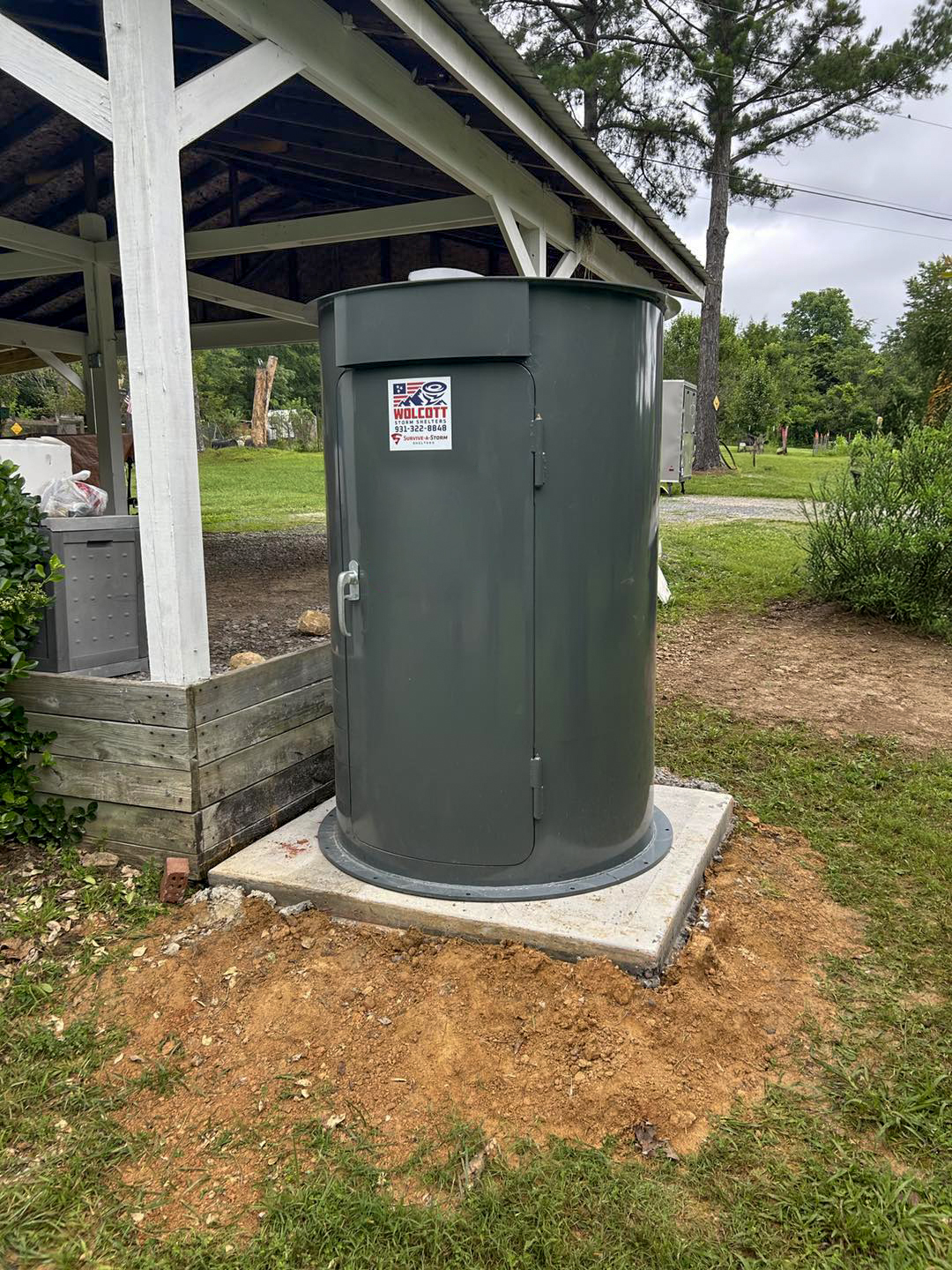
Above-Ground Shelters
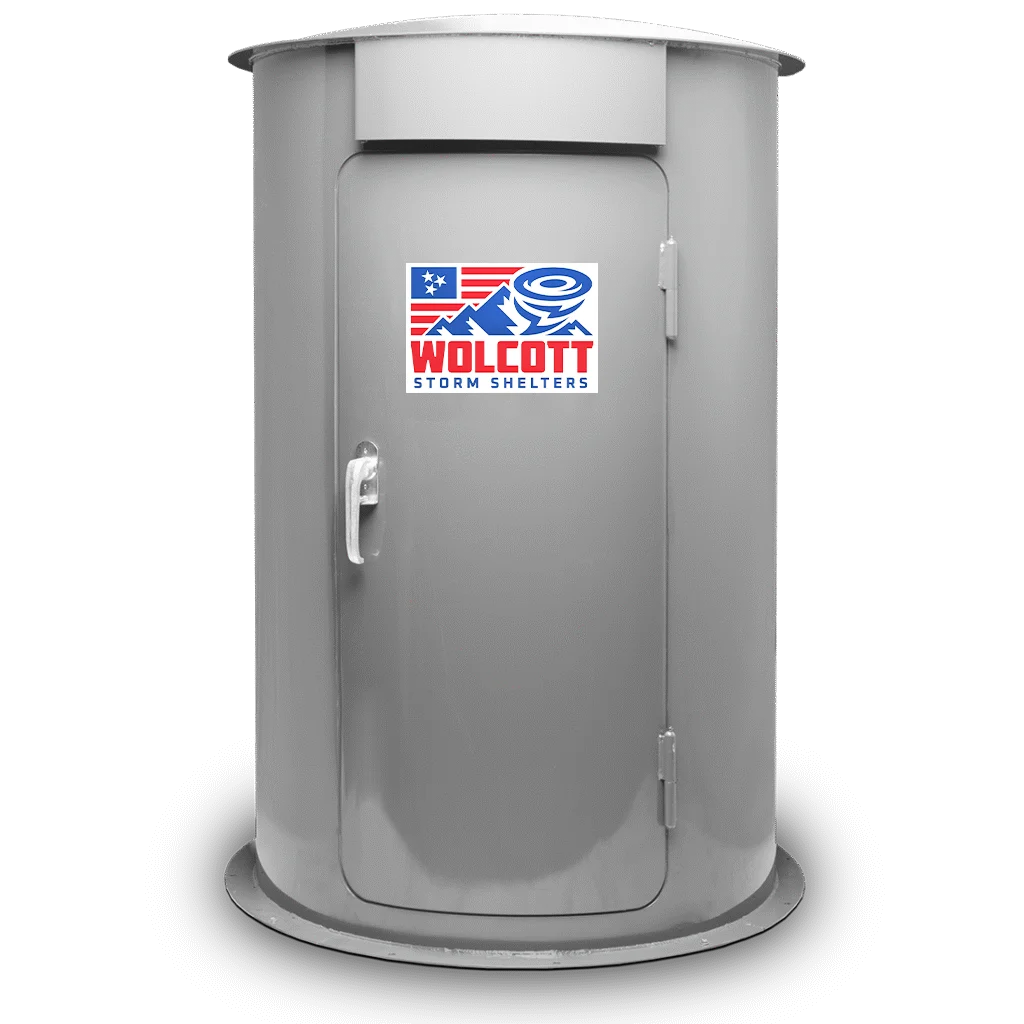
TwisterPod
From $3,760 MSRP | 4-6 people
Rolled steel in a single cylindrical piece, which is the shape engineers reach for when they want strength without weight. It tucks into a garage corner and takes up about as much floor as a chest freezer. The right pick for a couple, a small family, or a two-car garage that already has a lot going on in it.
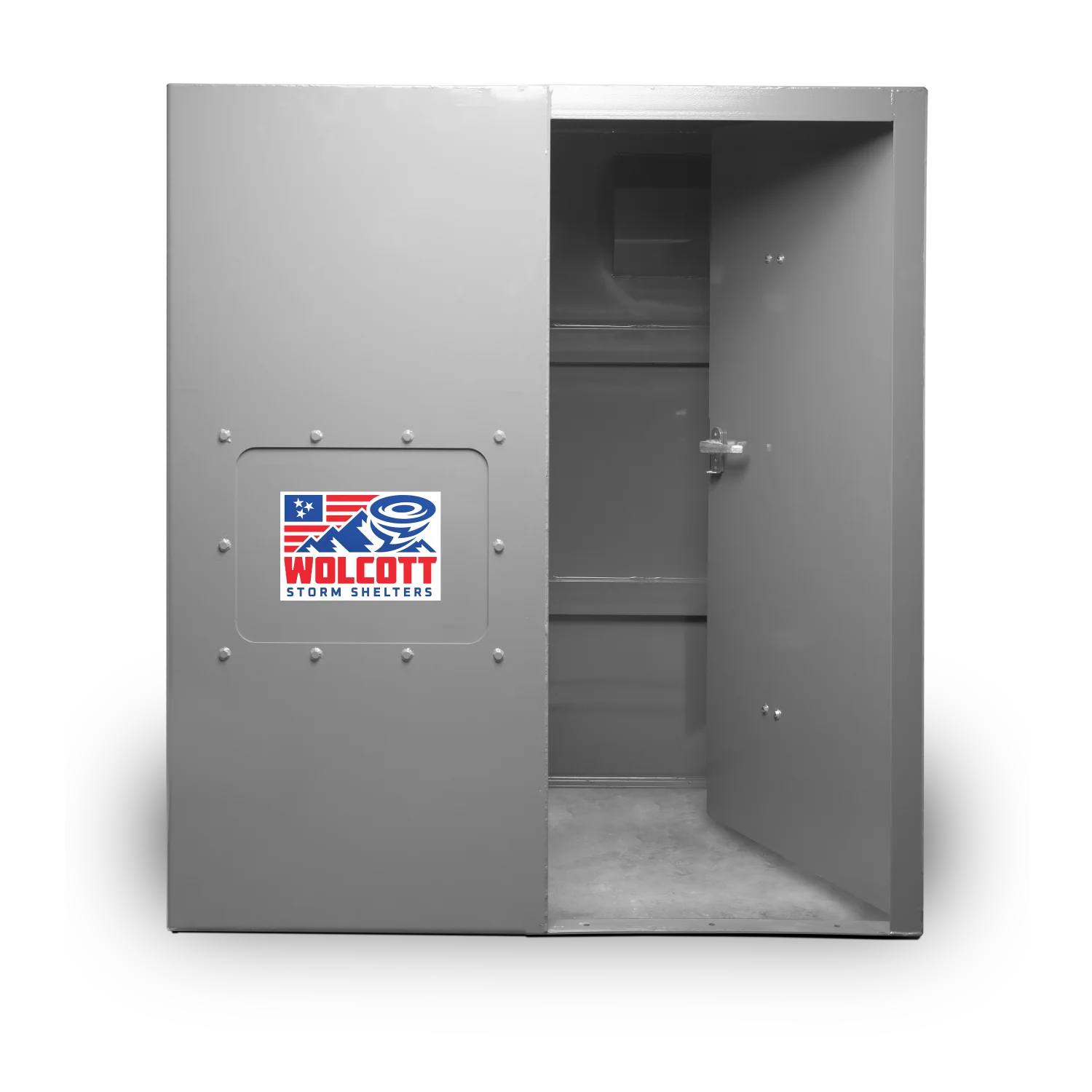
Extreme Shelter
From $5,415 MSRP | 5-16 people
Quarter-inch steel throughout, rated to NIJ Level 2A ballistics, with an escape hatch that opens by hand if debris ever piles against the main door. Nine size configurations, so the footprint can be matched to the space instead of the other way around. Homeowners who want the heaviest above-ground protection built end up here.
Below-Ground Shelters
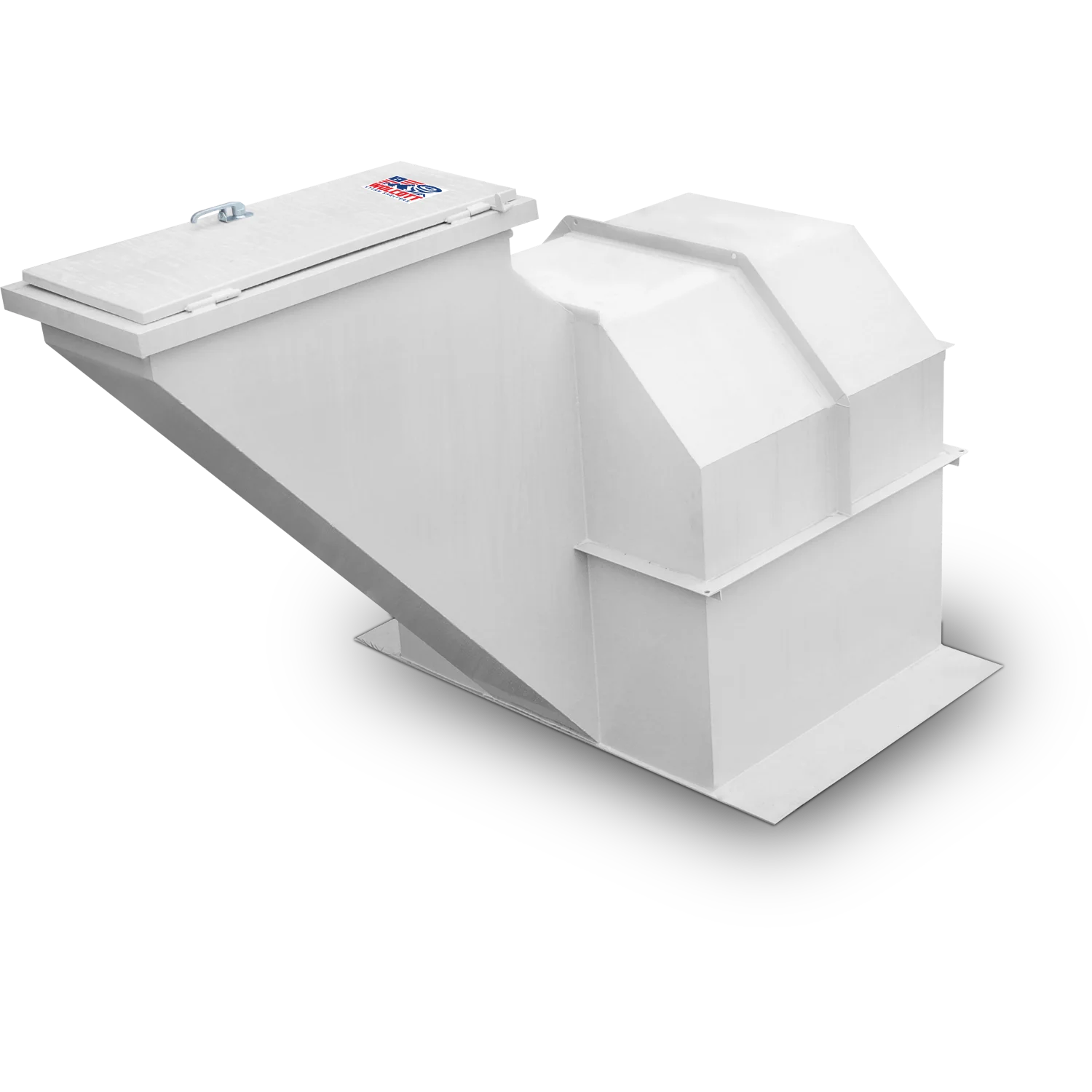
Estate
From $10,275 MSRP | 10-16 people
Installed in the yard, backfilled, and landscaped over, with bench seating on three sides and a handrail down non-slip treads. The larger of the two sizes seats sixteen, which matters more than people expect. Shelters fill up with neighbors, and nobody plans for that in advance.
Above-Ground or Below-Ground in Kentucky?
Above-Ground Storm Shelters
- Installs on existing concrete with no excavation
- Usually finished in a single day
- Works on lots where digging is a problem (shallow bedrock, high water table, tight setbacks)
- Unbolts and moves with you
- Lower cost to get protected
Below-Ground Storm Shelters
- Invisible once the site is restored
- Nothing changes about how the house or yard looks
- Naturally cooler through Kentucky summers
- Larger capacities available
- Requires a site evaluation before we can commit to it
Where We Install in Kentucky
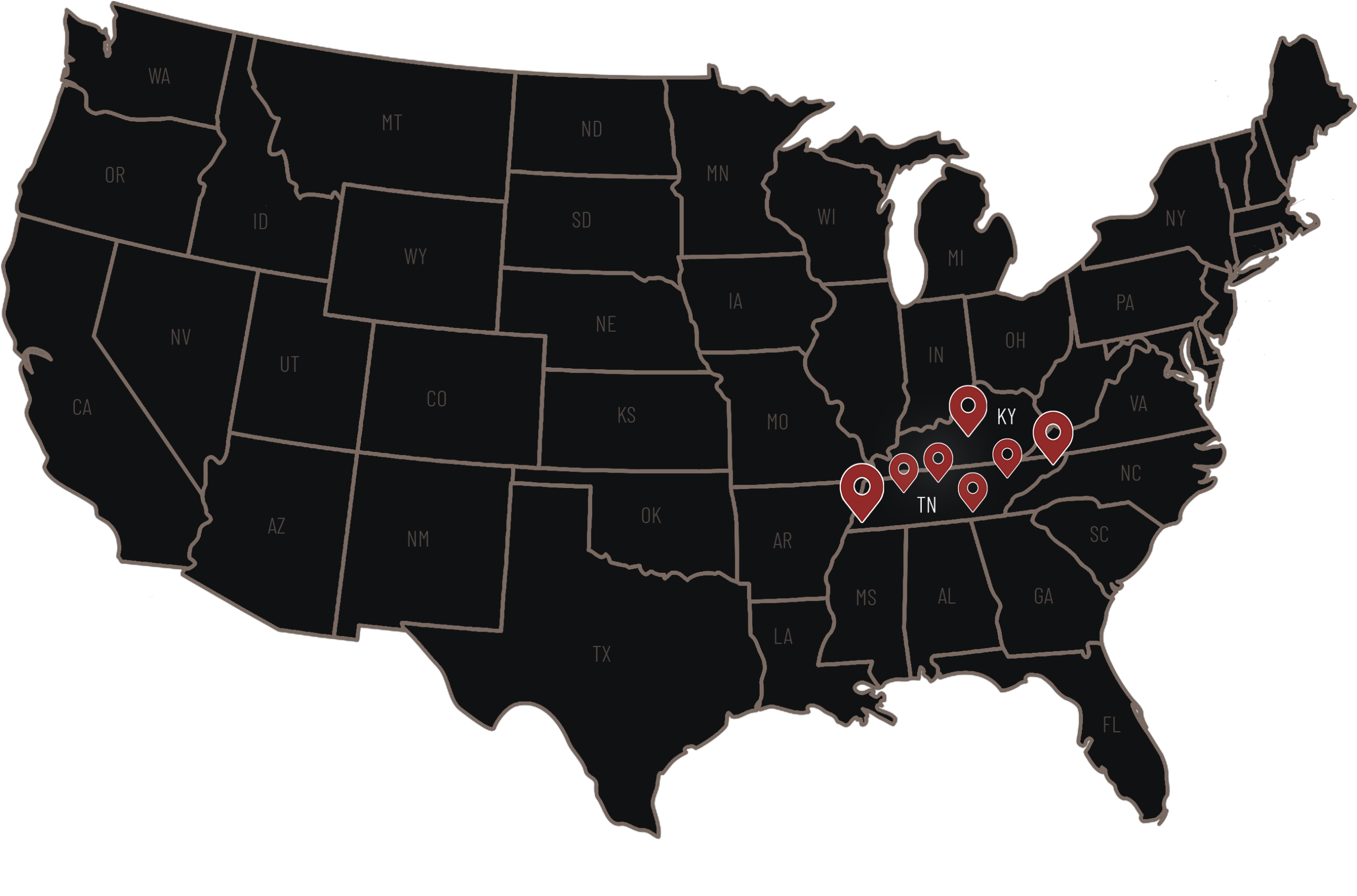
Louisville and Northern Kentucky
Louisville · Covington · Florence · Shepherdsville · La Grange · Newport
Bluegrass
Lexington · Richmond · Georgetown · Nicholasville · Winchester · Frankfort · Danville
South-Central
Bowling Green · Elizabethtown · Glasgow · Somerset · London · Corbin · Campbellsville
Western Kentucky
Owensboro · Paducah · Hopkinsville · Madisonville · Henderson · Mayfield · Murray
Eastern Kentucky
Ashland · Pikeville · Hazard · Morehead · Prestonsburg · Middlesboro
Rural addresses:
Farms, hollows, and long gravel drives are ordinary work for us. Access gets checked during the site evaluation, and anything that affects cost gets quoted before you commit to a thing.
“Do I Really Need One Where I Live?”
High-Risk Tennessee Counties
The Purchase and the western coalfield, where the December 2021 outbreak and the 2025 season both landed hardest.
The Pennyroyal and south-central belt through Warren, Barren, and Hart.
The Ohio River corridor and Bluegrass, including Jefferson, Fayette, and the counties around them.
Medium-Risk Areas
Every other region we serve: Northern Kentucky has recorded confirmed tornadoes repeatedly since 2011. The Cumberland Plateau and eastern counties took an EF4 in 2025. Frequency is lower in some regions than others; consequence is not.
“Safe” Areas
None exist anywhere in Kentucky. The state sits in Dixie Alley, where tornado risk runs across the whole map.
What Working With Wolcott Storm Shelters Looks Like
1. Tell us about your property
2. Site evaluation
3. Your quote and your model
4. Installation and walkthrough
What Kentucky Homeowners Should Know About Shelter Safety
Kentucky’s tornadoes come at night
About 41.5% of the state’s tornadoes touch down between sunset and sunrise, and overnight tornadoes are roughly 2.5 times deadlier than daytime ones. Research places Kentucky among the highest nocturnal tornado fatality risks in the country. A shelter steps from the bedroom is the practical answer to a storm that arrives while you’re asleep.
The threat is moving toward you, not away
Modeling of where significant tornadoes will concentrate points east of Interstate 35: the mid-South, the Ozarks, and the lower Ohio Valley. Kentucky sits inside that zone. The mid-South is projected to carry roughly 25% greater tornado threat, and Kentucky is named directly in long-term data showing tornado frequency climbing east of the Mississippi.
Certified shelters have a spotless record
Investigators have never documented a death inside a shelter built to FEMA P-361 standards. Not one, anywhere in the country, across every outbreak on record since the standard was written.
Kentucky Storm Shelter Questions, Answered
Do I need a permit to put a storm shelter on my property in Kentucky?
It depends on your county or city, and requirements differ across the state. Some jurisdictions treat a shelter as an accessory structure, some review the site work, and some want very little. We’ll tell you what we know about your area during the site evaluation and point you to the office that issues the final answer. What we won’t do is promise you a permit-free install before anyone has looked at your address.
We’re on limestone. Can you still put a shelter underground?
Sometimes, and sometimes the honest answer is no. The Pennyroyal Plateau around Bowling Green, Glasgow, and Mammoth Cave has more than 60,000 mapped sinkholes, and shallow bedrock across karst country can turn a routine excavation into a very different job. Our background is excavation before it was shelters, so the site evaluation is a real evaluation. If your ground says above-ground, we’ll say above-ground rather than sell you a dig that shouldn’t happen.
We have a manufactured home. Does a shelter work for us?
It’s one of the strongest reasons to have one. Manufactured housing offers almost nothing against tornado winds, and fatality rates in mobile homes run many times higher than in permanent structures. An above-ground unit anchored to a poured pad next to the home gives you somewhere real to go. We’ll talk through pad requirements before anything is ordered.
How long does installation take?
Above-ground shelters are usually a single-day job — position, drill, anchor to specification, walk you through the door and the latch. Below-ground shelters take one to two days depending on excavation and restoration. Lead time from order to install day depends on the model and what’s on the yard.
Do you actually come out to my part of the state?
Yes. We install statewide. Scheduling naturally clusters by corridor, so the day we’re in your area may depend on what else is booked nearby that week. Tell us your county on the quote form and we’ll be straight with you about timing before you commit to anything.
How much does a storm shelter cost in Kentucky?
Shelters on this page start at $3,760 MSRP and run to $10,275 MSRP depending on model and capacity. Site conditions affect final installed cost, particularly for below-ground units. Quotes are free and we’d rather give you a real number after seeing the site than a low one over the phone.
Kentucky passed a safe room rebate law. Does that help me?
Senate Bill 11 was signed in March 2026 and creates a residential safe room rebate program through Kentucky Emergency Management, starting January 2027, worth 50% of the cost up to $5,000. Two things to understand before you count on it. The General Assembly hasn’t appropriated funding yet, so the program isn’t operating. And as written, homeowners who take the rebate agree to open their shelter to the community during a weather emergency. Worth watching. Not worth waiting on if this is your family’s storm plan.
Will my insurance company give me a discount?
Some carriers reduce premiums for a certified shelter and some don’t. Ask your agent specifically about FEMA P-361 compliance, and we’ll provide whatever documentation they want to see.
Does a shelter add value to the house?
In a state that’s had 15 federally declared weather disasters in six years, buyers notice. Below-ground units stay with the property. Above-ground units can go with you or stay, whichever you decide when you sell.
Will my phone work inside?
Signal varies by shelter type and by where you live. Every shelter here comes with conduit connections pre-installed for electrical and data. We’d still tell you to keep a battery weather radio inside, and that’s the advice regardless of what your bars look like.

Every Kentucky Home Needs a Storm Plan
Our residential specialists will size the shelter to your family, evaluate the site properly, and schedule the install. Shelters are stocked and ready, not backordered from three states away.